 Get New Issue Alerts
Browse Archive
 PDF issue available for purchase
 Print issue available for purchase
- Vol 6 Issue 1
- Vol 5 Issue 2
- Vol 5 Issue 1
- Vol 4 Issue 2
- Vol 4 Issue 1
- Vol 3 Issue 2
- Vol 3 Issue 1
- Vol 2 Issue 2
- Vol 2 Issue 1
- Vol 1 Issue 2
- Vol 1 Issue 1
Journal of Bodies, Sexualities, and Masculinities
ISSN: 2688-8149 (print) • ISSN: 2688-8157 (online) • 2 issues per year
Volume 3 Issue 1
Masculinity, Sex, and Dicks
New Understandings of the Phallus
This special issue brings together interdisciplinary work exploring the relationship between bodies, masculinity, and the penis or phallus. The symbolism, significance, and meaning of the phallus or penis has varied historically and across disciplines. In the psychoanalytic tradition, “the subject…can only assume its identity through the adoption of a sexed identity, and the subject can only take up a sexed identity with reference to the phallus, for ‘the phallus is the privileged signifier’” (Segal 2007: 85). Jacques Lacan's work has inspired feminist critiques of “phallocentrism” in high and popular cultural texts since the 1970s (Segal 2007). Elizabeth Stephens (2007) describes the ancient Greek ideal of small penises as indexing self-control and rationality, while the Romans celebrated virility and power, which they associated with a large penis. Other scholarship has explored the racialization of penis size, such as the stereotype of Black men as possessing large penises, indexing hypersexuality and often depicted in racist terms as representing aggression or lack of civility (Lehman 2006).
About the Cover Image
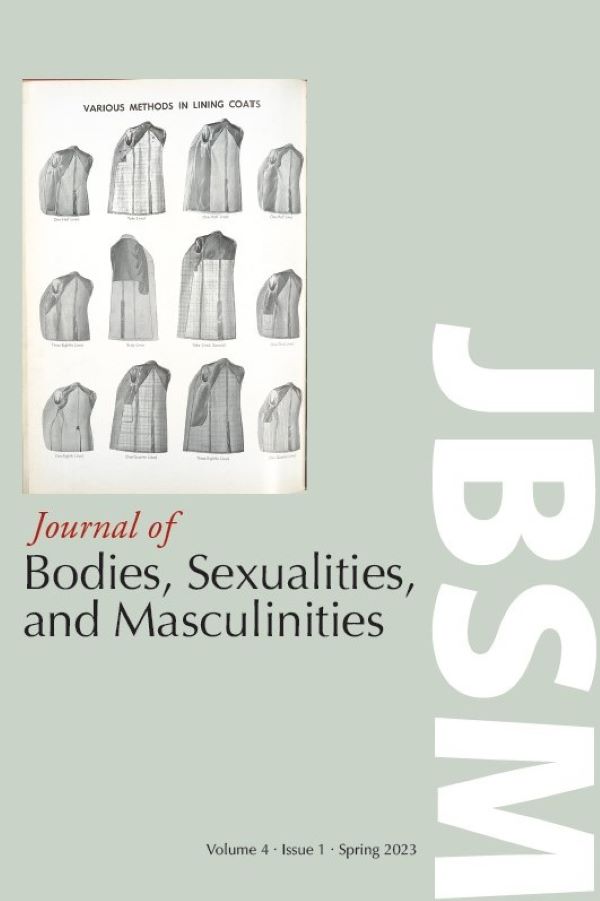
It was difficult to determine the right cover for this special issue. The purpose of the issue was to encourage new ways of thinking about the phallus, and the aim was to find an image that did just this—ask people to wonder what the image is telling us. What does it represent? What is the story? It is perhaps ironic that the image we found most appealing is a device designed to prevent a penis from functioning. In the late nineteenth century, masturbation was believed to cause mental illness, and solo ejaculation was considered a form of sexual dysfunction, and this is one example of many, often brutal, devices created to physically prevent erections and masturbation. Sitting over modern blue jeans, however, the image is erotic and evokes BDSM or kink culture. The old and the new, repression and eroticism, are one and the same.
Beyond the Body
Guillaume Dustan and the Poetics of Materialization
French writer Guillaume Dustan sparked rampant controversy in the 1990s and early 2000s because of his views on barebacking—practicing unprotected sex—as an irresistible prohibition and a duty to his serostatus. In
Showing the Penis, Hiding the Phallus, a Cinematic Rupture with the Mythic Representation of Male Nudity
While visual eroticism is an accepted theme in cinema, the penis is still the last frontier of representation onscreen, either covered from the gaze of viewers or coated in phallic status in its rare representations. This article explores a rupture with the mythic penile representations in cinema within the recurrent scenes of full-frontal male nudity in Steve McQueen's
Phallus in the Practice of Brahmacharya
This article focuses on the place of phallus/penis in the practice of
The Experiences of First Ejaculation among Taiwanese Men
An Exploratory Study
Spermarche (first penile ejaculation) is a physiological event that many boys experience as part of the onset of puberty. However, there is little qualitative research on how they themselves experience and interpret it. Based on interviews with 26 Taiwanese men, experiences of spermarche occurred due to: (1) sexual behavior; (2) nocturnal emission; (3) naïve self-exploration; and (4) masturbation were identified and examined. Findings reveal that ejaculation was experienced as a complex and dynamic process with diverse emotions which were entangled. In addition, it was understood not just as a biological phenomenon, but there are broader social, cultural and medical discourses that shape how these men feel and reflect on their first ejaculation experience. In the end, the contribution of this study to the research field of spermarche is suggested.
Toward a Politics of “Raw Dicks”
Authenticity, the Alt-Self, and New Understandings of the Phallus
Law arguably shapes contemporary culture and phallic politics. In England and Wales, like much of the Global North, the second half of the twentieth century and early twenty-first century saw a general shift from a criminal legal framework that understood sexuality as sexual acts to a civil law framework that seeks to privilege institutions - notably marriage - and lifestyle as signifiers of sexuality. This article contributes to legal and cultural understandings of the phallus, specifically the “raw dick,” as key to understanding the self-representational spaces of “authentic” and “alt” selves on social media. It situates the “raw dick” as the locus of this cultural, legal, and social exchange in which the legal outlaw of male phallic desire has been incorporated into queer citizenship. We argue that the aesthetics of the alt-self provides us with new and important ways to understand the phallus and its relationship to sex and sexuality.
Book Forum
The